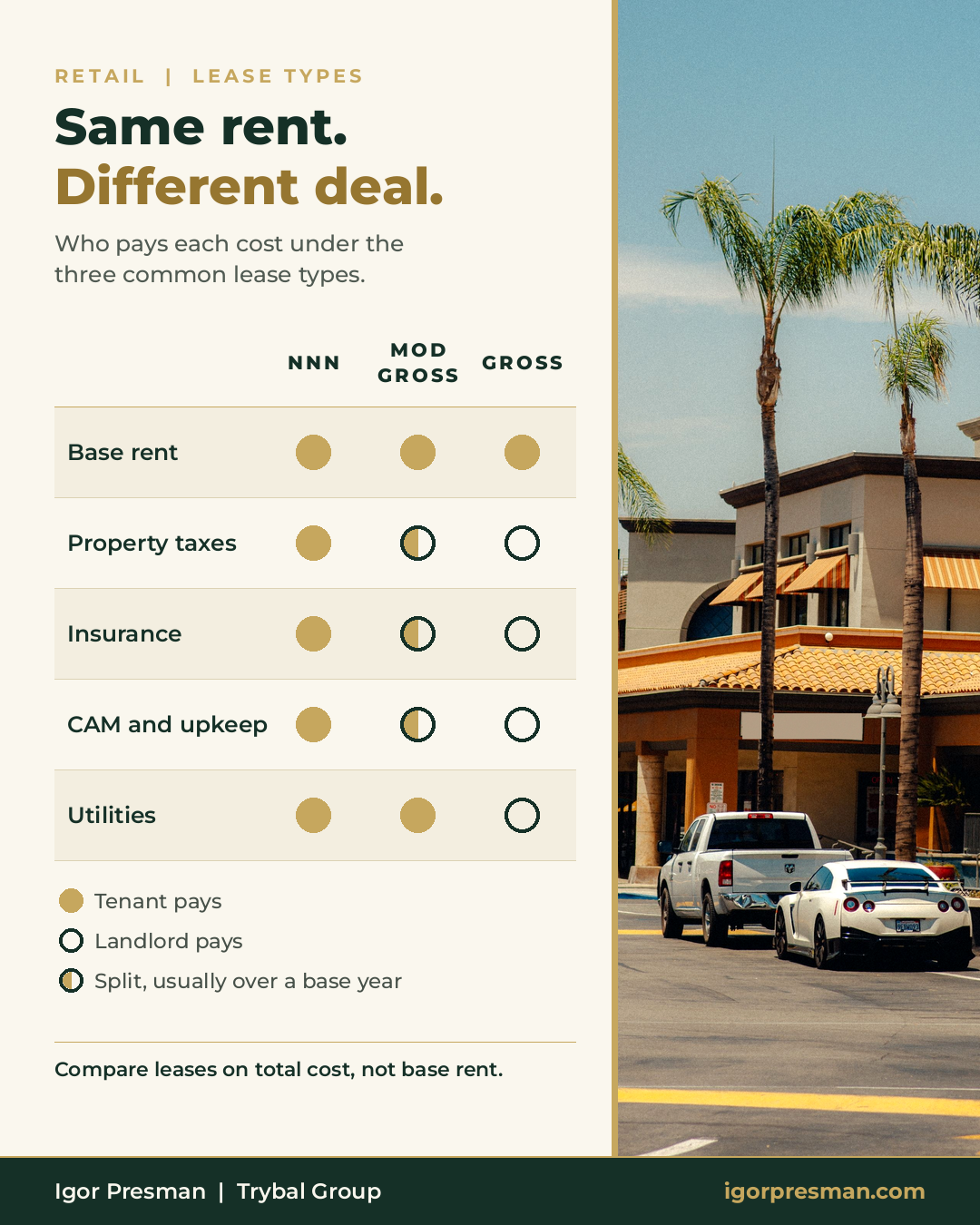
Short answer: on a triple net (NNN) lease the tenant pays base rent plus its share of property taxes, insurance and common area maintenance. On a gross lease the landlord pays those costs out of the rent. Modified gross splits them, and the split is negotiated lease by lease. Two plaza bays can quote the same base rent and still cost very different amounts, so always compare total occupancy cost and read the leases.
Picture two plaza bays on the same road in Broward, both quoting the same base rent. One lease is NNN and the other is gross. On paper they look identical. In real life, the tenant in the NNN space is writing a bigger check every month, and the landlord on the gross lease is taking on a lot more risk. I see this all the time with retail plazas across Miami-Dade, Broward and Palm Beach.
What a triple net lease covers
On a triple net lease, the tenant pays base rent plus its share of three things: property taxes, building insurance and common area maintenance, which everyone calls CAM. CAM covers the parking lot, landscaping, lighting, trash, security and repairs to shared areas. Each tenant usually pays based on the share of the plaza it occupies. It is the most common setup for shopping center space.
How a gross lease works
On a gross lease, the landlord pays those costs out of the rent. The tenant pays one number and usually its own utilities. It is simple for the tenant to budget, but every increase in taxes or insurance comes out of the landlord's pocket.
Where modified gross fits
Modified gross sits in between, and it is negotiated lease by lease. A common setup is a base year. The landlord covers expenses in the first year, then the tenant pays any increase after that. Because there is no standard version, the details in the lease language matter more here than anywhere else.
What investors should check
For an investor, the lease type changes the whole picture. When taxes or insurance go up, an NNN landlord passes most of that through. A gross landlord absorbs it, and net income shrinks. So when you look at a plaza, read the leases, not just the rent roll.
- Check whether CAM is capped and how the cap works.
- Look at what is excluded from CAM.
- Confirm the landlord actually collects the reconciliations every year.
The same idea applies to any income property. The income is only as good as the leases and the tenants behind them. I go deeper on that in what makes a warehouse tenant creditworthy.
What tenants should check
For a tenant, compare total occupancy cost per foot, not just base rent. Ask for last year's CAM reconciliation and the current estimate. A lower base rent with heavy CAM can cost more than a higher rent on a clean gross deal.
None of this is complicated once you see it laid out. It just needs to be checked before anything gets signed. If you want the bigger picture on plaza demand, read why South Florida retail is one of the tightest markets in the country. And if industrial is on your list too, here is what I check on every warehouse tour.
FAQ
Q: What does NNN mean in a retail lease?
NNN, or triple net, means the tenant pays base rent plus its share of property taxes, building insurance and common area maintenance.
Q: What is the difference between a gross lease and a modified gross lease?
On a gross lease the landlord pays taxes, insurance and maintenance out of the rent. On a modified gross lease those costs are split, often with the landlord covering a base year and the tenant paying increases after that.
Q: What is CAM?
CAM stands for common area maintenance. It covers shared costs like the parking lot, landscaping, lighting, trash, security and repairs to common areas.
Q: Which lease type is better for a retail plaza investor?
NNN leases usually protect a landlord better, because increases in taxes and insurance pass through to tenants. Check for CAM caps and exclusions, and make sure reconciliations are actually collected.
If you are looking at a retail plaza or a retail lease in Miami-Dade, Broward or Palm Beach, I am happy to go through the leases with you. Reach out to me directly, browse my current listings, or ask about off-market opportunities.

Igor Presman
Commercial Broker · Trybal Group