Short answer: a tenant estoppel certificate is a short signed statement from each tenant that confirms their rent, deposit, lease dates, concessions and any side deals or complaints. On a multifamily purchase, it lets you check the seller's rent roll against what the tenants themselves say. Once a tenant signs it, they generally can't claim a different deal after closing. I compare every estoppel line by line against the rent roll, the leases, the T12 and the bank deposits, and the timing for collecting them should be written into the purchase contract.
A rent roll is the seller telling you what the tenants pay. An estoppel is the tenant telling you. On a multifamily purchase, you want both. When I work with buyers on multifamily buildings in Miami-Dade, Broward and Palm Beach, estoppels are one of the due diligence items I care about most, because they are where the paperwork meets the people actually living in the building.
What a tenant estoppel certificate is
An estoppel certificate is a short document each tenant signs before closing. The buyer usually asks the seller to collect one from every unit. It confirms the basics of that tenant's deal in the tenant's own words, not the seller's.
The word estoppel comes from the legal idea that once you state something, you are stopped from saying the opposite later. That is the whole point of the form.
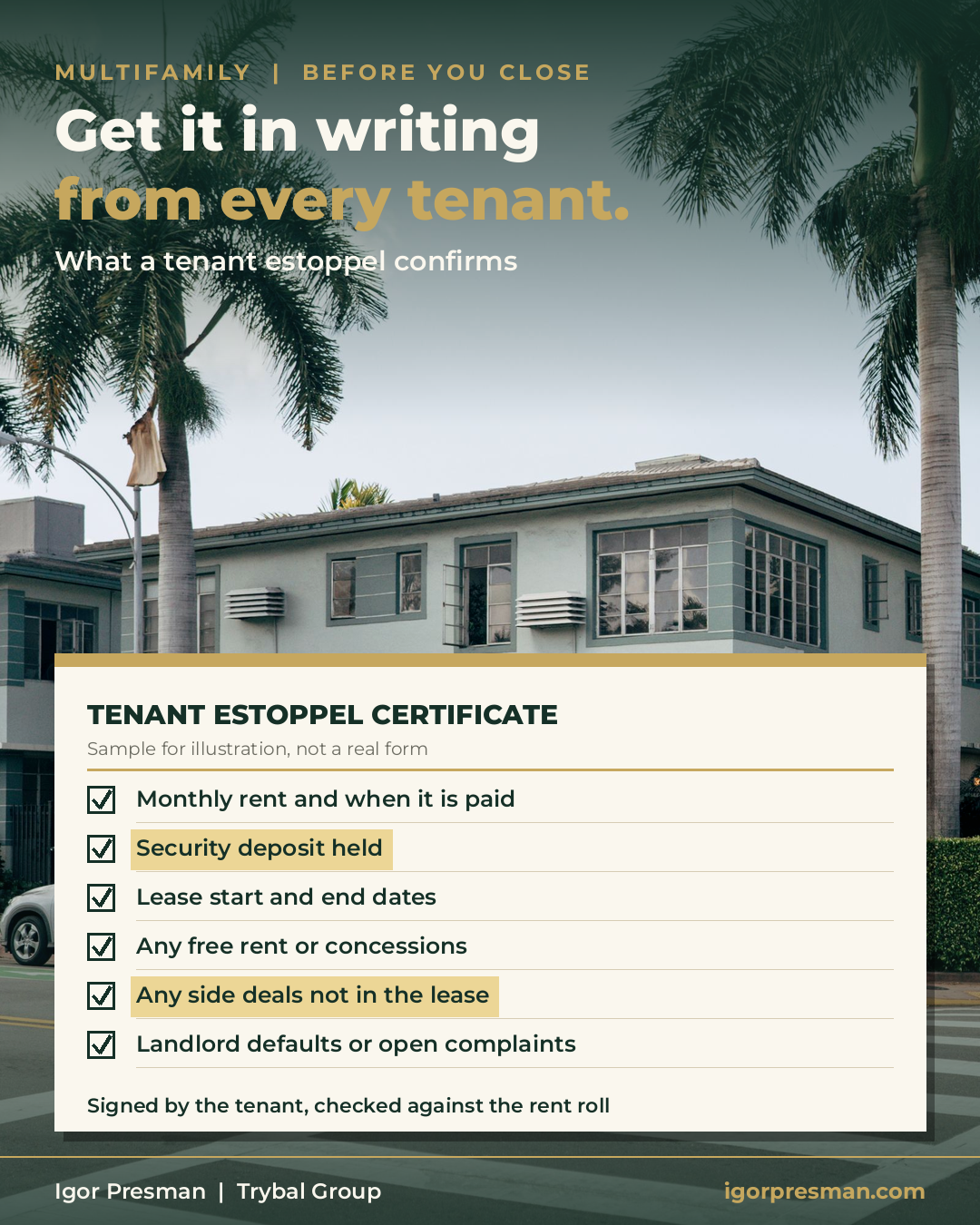
What an estoppel usually confirms
Every form is a little different, but most cover the same ground:
- The monthly rent and the date it's due.
- The security deposit and any other deposits the landlord is holding.
- The lease start and end dates, and any renewal option.
- Any free rent, reduced rent or other concession.
- Any side agreement that isn't written in the lease.
- Whether the tenant thinks the landlord is in default, or has an open complaint.
Why estoppels matter on a multifamily purchase
The rent roll is a summary the seller prepares. It might be accurate, it might be out of date, and it might leave things out without anyone meaning to. The estoppel gives you a second source for the same facts, straight from the tenant.
Once a tenant signs it, they generally can't come back after closing and claim a different deal than what they confirmed. That protects you as the new owner. If a tenant later says they were promised two months free, you have their signature saying otherwise.
What estoppels often catch
This is where they earn their keep. Estoppels regularly turn up things the rent roll missed:
- A security deposit that never made it onto the books.
- A month of free rent the old owner promised but nobody wrote down.
- A unit listed on a lease that really went month to month.
- A tenant who says the AC has been broken for months.
- A side deal, like a parking space or storage included at no charge.
Each of those changes the numbers or your first year as the owner. A missing deposit is money you may owe back to a tenant. A promised concession is rent you won't collect. A maintenance complaint is a repair, and maybe a relationship, you inherit. All of it is far easier to deal with before closing than after.
How I check estoppels against the rent roll, leases, T12 and bank deposits
I don't just file the estoppels. I compare each one line by line against four things:
- The rent roll, to see if the rent, deposit and lease dates match what the seller reported.
- The leases, to see if the signed lease says the same thing as both the rent roll and the tenant.
- The T12, the trailing twelve months of income and expenses, to see if the rent the building collected over the year supports what everyone says it is.
- The bank deposits, to see if the money actually hit the account.
When all four line up with the estoppel, you can trust the income. When they don't, you have a specific question for the seller. I walk through how I read the rent roll itself in how I read a multifamily rent roll before making an offer.
When the numbers don't match
A mismatch isn't always a red flag. Sometimes it's a typo, a tenant who misremembers their move-in date, or a deposit that was transferred correctly but recorded wrong. The point is to find it during the contract period, while you can still ask questions, get documents and negotiate. That is a conversation with the seller, not a surprise after you own the building.
Why the timing belongs in the purchase contract
On a small building, collecting estoppels from every tenant takes some time. Tenants travel, ignore paperwork, or need a second request. On a larger building, it's simply a lot of signatures. Either way, the purchase contract should say when the seller has to deliver them, so they arrive while you still have time to review them before your due diligence period ends.
Your attorney handles the estoppel form and the contract language. My job is making sure the numbers line up with what the seller told us.
FAQ
Q: What is a tenant estoppel certificate?
A tenant estoppel certificate is a short signed statement from a tenant that confirms the key terms of their lease, including rent, deposit, lease dates, concessions and whether they have any claims against the landlord.
Q: Who collects estoppel certificates in a multifamily sale?
The buyer usually asks the seller to collect a signed estoppel from each tenant before closing. The timing and form are typically set out in the purchase contract.
Q: What does an estoppel certificate protect the buyer from?
Once a tenant signs it, they generally can't claim a different deal after closing. It also helps the buyer catch missing deposits, unwritten concessions and open complaints before they own the building.
Q: What should estoppels be compared against?
I compare each estoppel line by line against the rent roll, the leases, the T12 and the bank deposits.
Q: Who prepares the estoppel form?
Your attorney handles the estoppel form and the contract language that sets when the seller must deliver them.
I always have multifamily at different budgets, from 4 units up to 200, across Miami-Dade, Broward and Palm Beach. For more on the market, read South Florida multifamily in 2026: the supply wave is cresting. If you want to talk through a building or what you're looking for, reach out to me directly, browse my current listings, or ask about off-market opportunities.

Igor Presman
Commercial Broker · Trybal Group