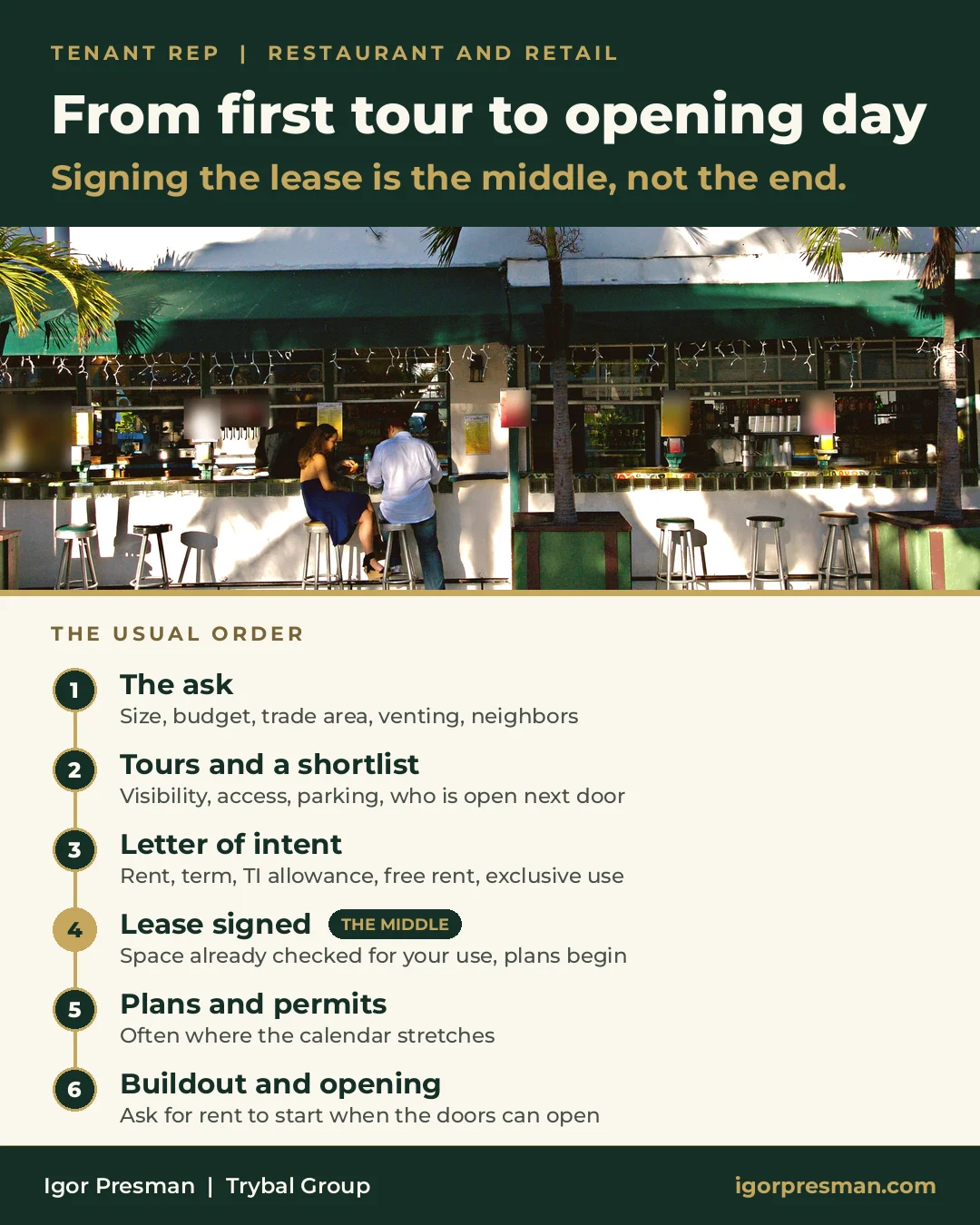
Short answer: for a restaurant or retail brand expanding into Miami-Dade, Broward or Palm Beach, signing the lease is usually the middle of the project, not the finish line. The usual order is the ask, tours and a shortlist, a letter of intent, the lease, then plans, permits and buildout, and finally opening. I plan backward from the opening date the brand has in mind, and I push for rent to start when the doors can open, not on the day the lease is signed.
Signing the lease feels like the big moment. In practice, a lot of the work that decides whether you open on time is still ahead of you. After about 30 years in retail, this is the order I see across Miami-Dade, Broward and Palm Beach, and where the time tends to go.
Start with the ask, not the tour
Before we look at any spaces, we write down what the brand actually needs. Size, budget, the trade area, parking, venting or power, and the kind of neighbors that bring your customers. A restaurant has a different list than a retail shop or a fitness concept, but the idea is the same. If those points are fuzzy, you spend weeks touring rooms that were never going to work.
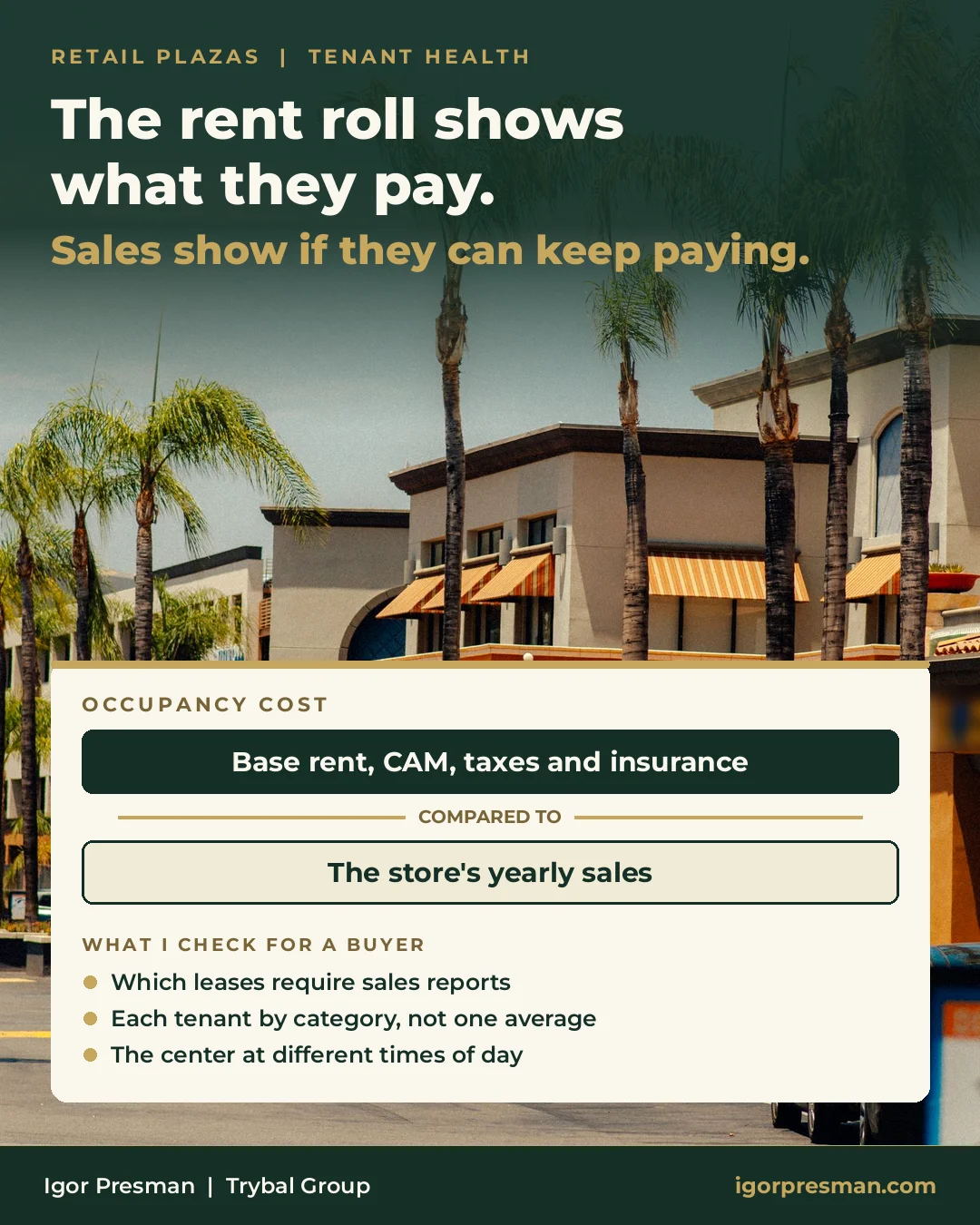
Budget here means the full cost to occupy the space, not just the base rent on a flyer. I walk through that math in what occupancy cost tells you about a retail plaza, and the common lease structures in NNN vs gross vs modified gross retail leases in South Florida. A brand that knows exactly what it wants spends far less time on the road.
Tours and a shortlist
I walk the centers at different times of day. I look at who is open next door, how cars get in, whether people can see the sign from the road, and whether the parking works at the hours that matter for your use. A quiet Tuesday morning is a poor test for a dinner restaurant or a gym with an evening rush.
The shortlist should be short on purpose. A few spaces that actually fit the ask are more useful than a long tour of almosts. This is also when I start thinking about whether the space can be built for the use, especially for a restaurant.
The letter of intent sets the business points
The letter of intent is where the big business points get set: rent, term, renewal options, tenant improvement allowance, free rent during buildout, exclusive use, and who handles which work in the space. If a point is going to matter later, this is the time to put it on paper.
For restaurants, free rent during buildout, or a rent start tied to opening, is one of the points I push hardest. You do not want rent to start the day you sign if the city is still sitting on the plans.
The letter will not cover every lease issue you should think about. I go through visibility and access, the tenants next door, exclusives, co-tenancy and the terms at the end of the lease in what a retail or restaurant brand should check before signing a lease in South Florida.
The lease, and whether the space can actually be built
While the lawyers go back and forth, this is the time to have the architect or contractor confirm the space can actually be built for your use. For a restaurant that means the hood and venting path, the grease trap, gas, power and plumbing. It also means confirming the city will issue a certificate of use for your business at that address.
A space can look perfect on a tour and still be a problem once you try to run a kitchen in it. Those checks belong on the calendar during lease negotiation, not after the ink is dry.
Plans, permits and buildout
For restaurants this is very often where the calendar stretches. Plans have to be drawn, submitted and reviewed. Inspections come in stages. Equipment has lead times. Signage has its own approvals.
That is why I push for rent to start when the doors can open, or after a set buildout period, instead of on the day the lease is signed. It is much easier to ask for that in the letter of intent than to fix it later. Retail and fitness buildouts can be simpler, but they still need plans, permits, inspections and a certificate of use.
Work backward from opening day
Opening itself is signage, final inspections, hiring and stocking. Those last steps only land on time if the earlier ones were planned with a date in mind.
The best timelines I see start from the opening date the brand has in mind and work backward from there. If you know when you want the doors open, you can see when permits have to be in, when the lease has to be signed, and when the search has to start. Working forward from a loose plan to go look at spaces is how openings slip.
I represent the brand, not the building. Tenant rep work for expanding brands is usually paid from the landlord side, so you have someone in your corner at little or no direct cost.
FAQ
Q: Is signing the lease the last step before a restaurant or retail store can open?
No. Signing is usually the middle of the project. After the lease comes plans, permits, buildout, inspections, signage, hiring and stocking. Checks like whether the space can be built and approved for your use should already be in motion while the lease is being negotiated.
Q: What is a letter of intent in a retail or restaurant lease?
The letter of intent sets the main business points before the full lease is drafted. Those points usually include rent, term, renewal options, tenant improvement allowance, free rent during buildout, exclusive use, and which party handles which work in the space.
Q: Why do restaurant openings often take longer after the lease is signed?
Plan review, inspections and equipment lead times all add up, and a restaurant also has to prove out the hood, venting, grease trap, gas, power and plumbing. That is often where the calendar stretches.
Q: When should rent start on a new restaurant or retail lease?
I push for rent to start when the doors can open, or after a set buildout period, instead of on the day the lease is signed. That point is much easier to set in the letter of intent than to change later.
Q: Who pays for tenant representation when a brand expands into South Florida?
In most of these deals, tenant rep work is paid from the landlord side, so a restaurant, retail, franchise or fitness brand expanding into Miami-Dade, Broward or Palm Beach can have representation at little or no direct cost.
I work with restaurant, retail, franchise and fitness brands expanding across Miami-Dade, Broward and Palm Beach. If you are planning an opening, reach out to me directly, browse my current listings, or ask about off-market opportunities.

Igor Presman
Commercial Broker · Trybal Group