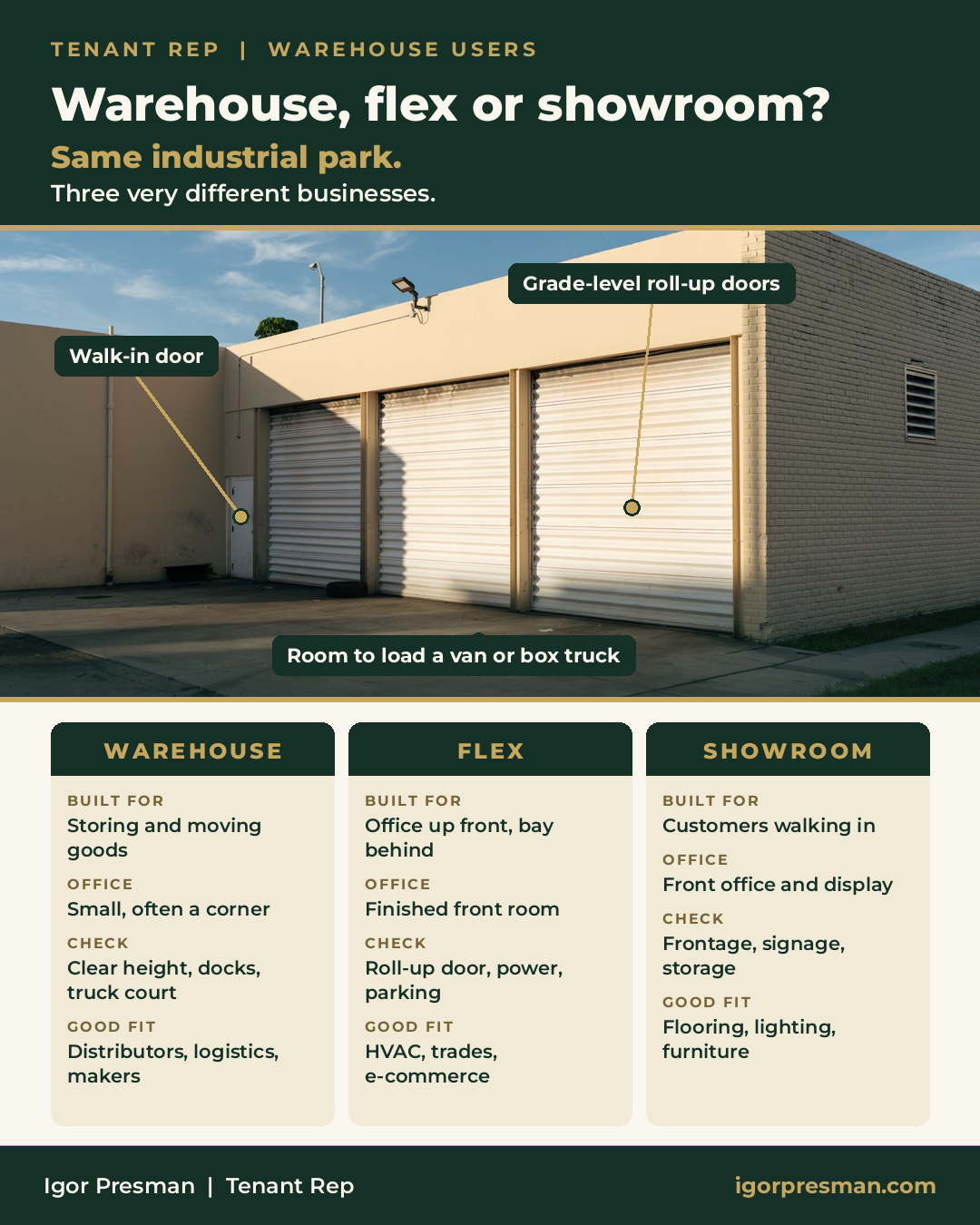
Short answer: a warehouse is mostly open floor for storing and moving goods, where clear height, loading doors and truck access matter most. Flex space is a finished office up front with a warehouse bay and roll-up door behind it, a good fit for trades and e-commerce sellers. A showroom puts the customer first, with frontage, signage, parking and a finished floor, plus storage in the back. To pick one, answer three questions: how many trucks come and go each day, how much inventory you keep on site, and whether customers ever walk in.
Warehouse, flex and showroom space can sit side by side in the same industrial park in Miami-Dade, Broward or Palm Beach, and they still fit three very different businesses. When a company is expanding into South Florida, picking the right type first saves a lot of wasted tours. Here is how I explain the difference to tenants.
Warehouse space
A warehouse is mostly open floor built for storing and moving goods. The office is small, often just a corner. What matters most:
- Clear height, meaning how high you can actually stack before you hit the lowest beam, sprinkler or light
- The loading doors, and whether they match your vehicles
- Whether a truck can actually get in, back up and turn around on the lot
Dock-high doors sit at trailer bed height, so they work for tractor trailers. Grade-level roll-up doors sit at ground level and work for vans and box trucks. Many users need some of each.
Distributors, logistics firms and light manufacturers usually land here. I go through what I look at on a site visit in what I check on every warehouse tour in South Florida.
Flex space
Flex is a mix. It is usually a finished office up front with a warehouse bay and a roll-up door behind it. HVAC contractors, plumbers, electricians and other trades like it, and so do e-commerce sellers who need fulfillment space. The crew, the stock and the paperwork all live under one roof.
When a client is looking at flex, I ask about three things:
- Power, because some trades and light assembly need more than a standard office
- Parking for the work vans, not just for employees' cars
- Whether the bay is air conditioned or only the office, because that changes what you can store and how the crew works in the summer
Flex buildings are often small bay, with several tenants in one building. I compare that format with larger buildings in small bay vs big box industrial.
Showroom space
In a showroom, the customer comes first. You want frontage, signage, easy parking and a finished floor where people can see and touch the product, with storage behind it. Flooring, lighting, furniture, kitchen and bath, and some specialty retail fit here.
Check what signage the landlord and the city allow before you fall in love with a space. A showroom that customers cannot find from the road loses most of its value. Also look at how the space works on a busy day, including where customers park and where your deliveries come in so they do not block the front.
Zoning and certificate of use for all three
One more thing applies to every type. Make sure the zoning and the city's certificate of use allow your business at that address before you sign. A warehouse park can allow storage but not retail sales, and a showroom with walk-in customers can be treated differently from a distribution use. A good lease does not help if you cannot open. I cover this in more detail in a signed lease does not mean your warehouse tenant can open.
The three questions I ask before we tour
Before we tour anything, I ask a client three questions:
- How many trucks come and go each day, and what size are they?
- How much inventory do you keep on site?
- Do customers ever walk in?
Lots of trucks and lots of inventory point to a warehouse. A crew, some stock and an office point to flex. Walk-in customers point to a showroom. Those three answers usually tell us which type to look at, and they save weeks of touring the wrong buildings.
Lease terms to read for any industrial space
Many industrial and flex leases are NNN or close to it, which means the tenant pays a share of taxes, insurance and maintenance on top of base rent. Read who handles the roof, the structure and the HVAC, because those can be large items. See who pays for the roof on an NNN industrial lease.
FAQ
Q: What is the difference between warehouse and flex space?
A warehouse is mostly open floor with a small office, built around clear height, loading doors and truck access. Flex space has a larger finished office up front with a warehouse bay and roll-up door behind it.
Q: What is showroom space?
Showroom space is built for customers to visit. It has frontage, signage, parking and a finished floor to display products, usually with storage in the back.
Q: Who uses flex space?
HVAC contractors, plumbers, electricians and other trades use flex space, along with e-commerce sellers who need fulfillment space, because the office, crew and inventory fit under one roof.
Q: What is the difference between dock-high and grade-level doors?
Dock-high doors are set at trailer bed height for tractor trailers. Grade-level roll-up doors are at ground level for vans and box trucks.
Q: Do I need to check zoning before leasing a warehouse or showroom?
Yes. Confirm that the zoning and the city's certificate of use allow your business at that address before you sign the lease.
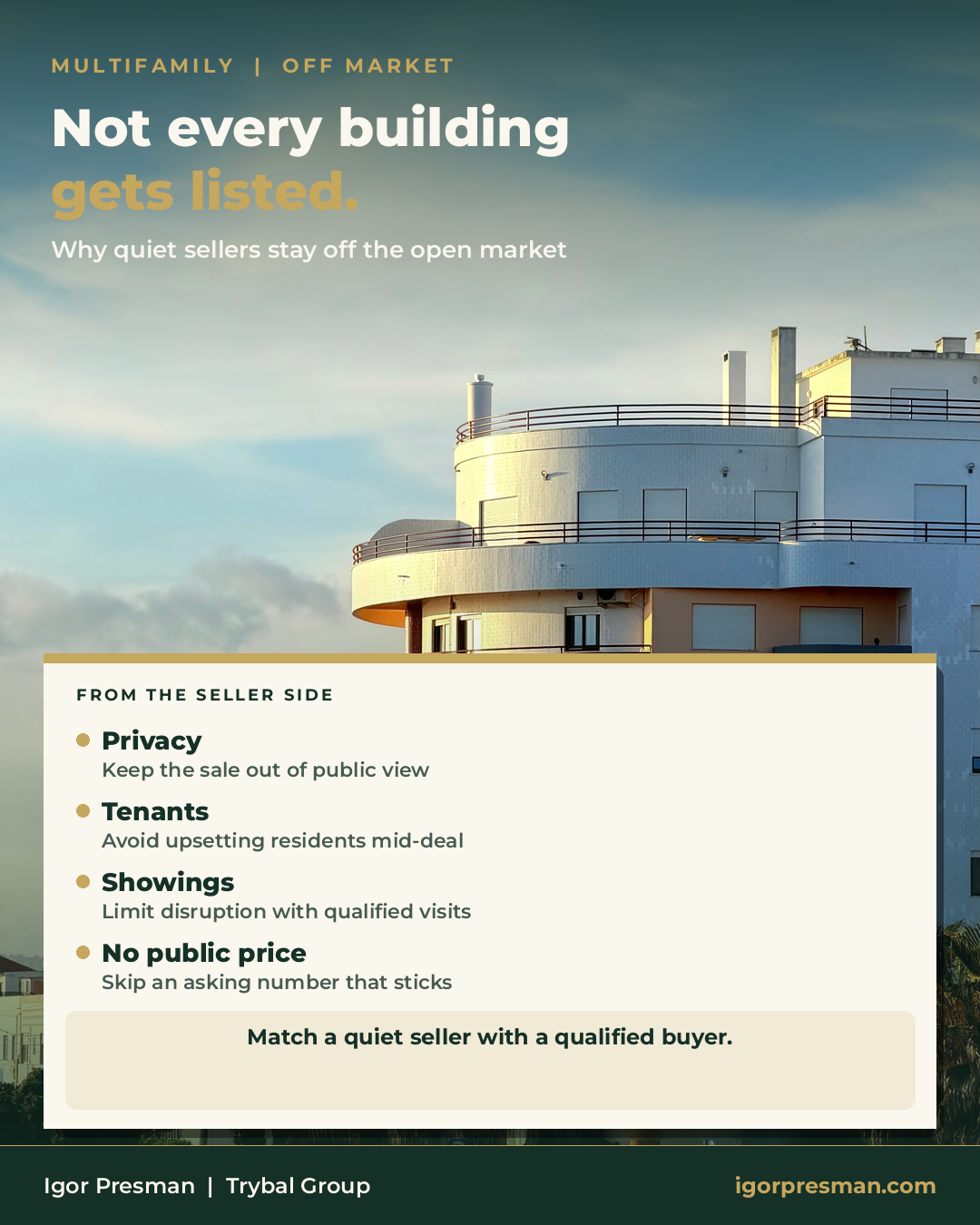
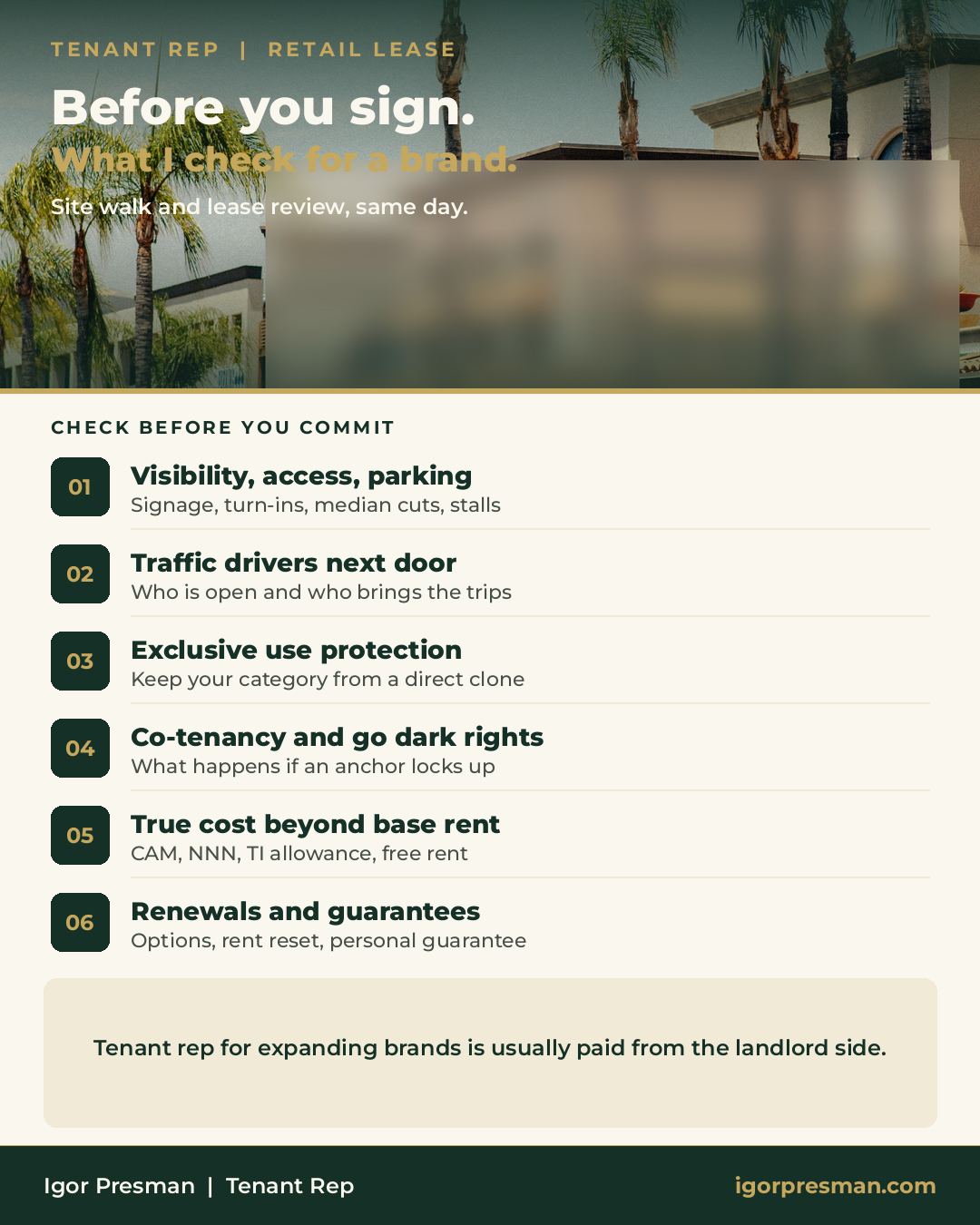
I have about 30 years in retail myself, and tenant rep work is usually paid from the landlord side, so you have someone on your side through the search and the lease. Expanding into Miami-Dade, Broward or Palm Beach? Reach out to me directly, browse my current listings, or ask about off-market opportunities.

Igor Presman
Commercial Broker · Trybal Group