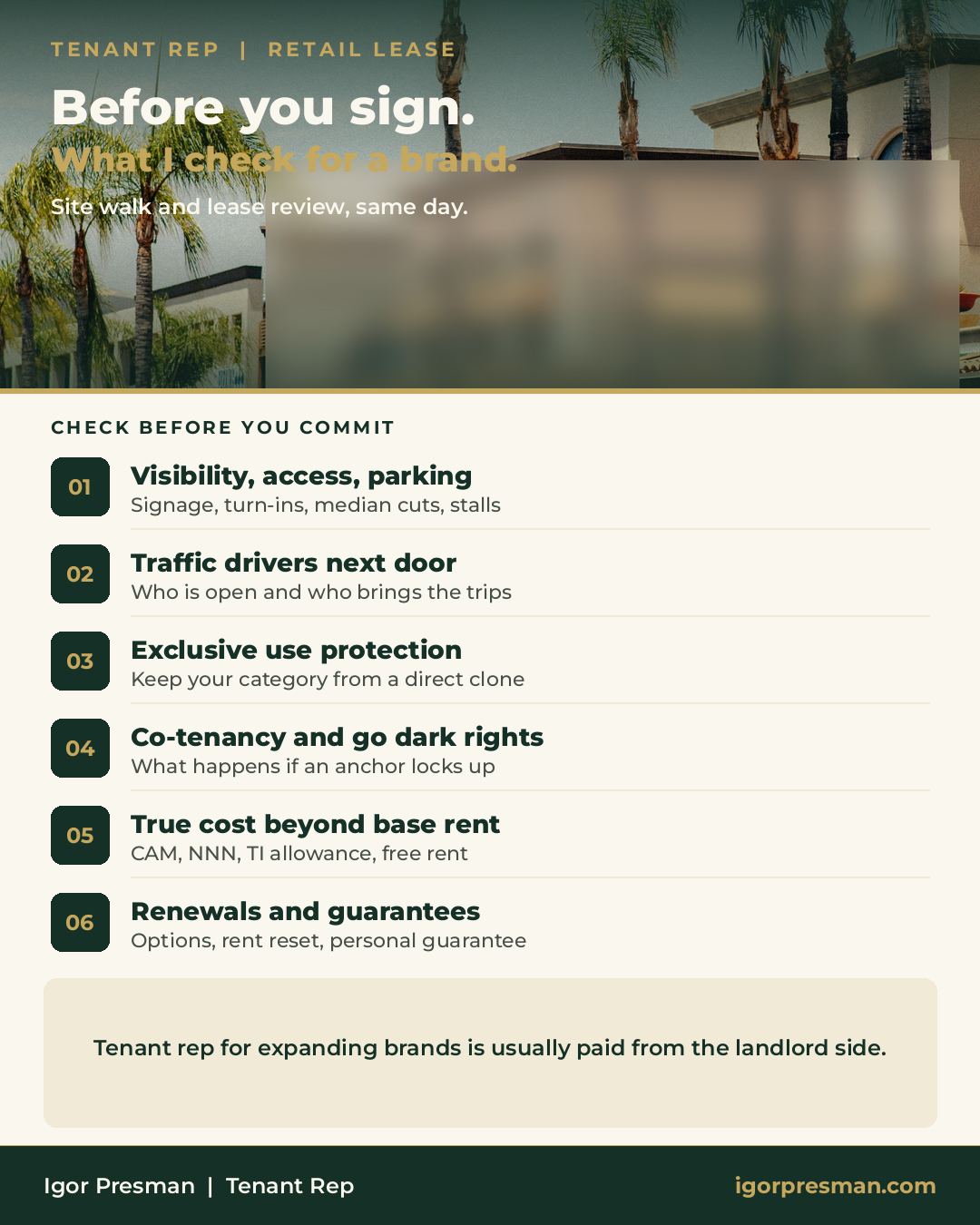
Short answer: before a retail or restaurant brand signs a lease in Miami-Dade, Broward or Palm Beach, check six things. Visibility and access, including signage rights, turn-ins and parking. The tenants next door and who actually drives traffic. Exclusive use language for your category. Co-tenancy and go dark rights if an anchor closes. The true occupancy cost, meaning base rent plus CAM, NNN charges, insurance, taxes, tenant improvement allowance and free rent during buildout. And the terms at the end of the lease, such as renewal options, how rent resets and any personal guarantee.
The base rent on a retail space is only the first number I look at when I sit on the brand side of a lease. A space can look cheap on paper and still cost you more than the next site once you add the charges on top, or once you realize customers cannot see the storefront, cannot turn in easily, or have nowhere to park. Before a client signs in Miami-Dade, Broward or Palm Beach, I walk the center and the lease with the same checklist.
1. Visibility and access
Start with what a customer actually experiences. Can people see your sign from the road. Do you have the signage rights you need on the building and on the pylon, and are they written into the lease. How do cars really get in, including turn-ins, median cuts and how hard it is to get back out. Is the parking ratio enough for your use on a busy Saturday, not just on a quiet Tuesday morning when you toured.
A restaurant with a dinner rush and a fitness concept with a 6 PM peak need very different parking than a dry cleaner. I look at the site at the hours that matter for your business.
2. Who sits next to you
The other tenants shape your traffic. A dark box or a weak mix next door can starve a good concept. I want to know which tenants are open today, which ones draw daily trips, like a grocery store, a pharmacy or a busy coffee shop, and whether any of them are close to the end of their lease.
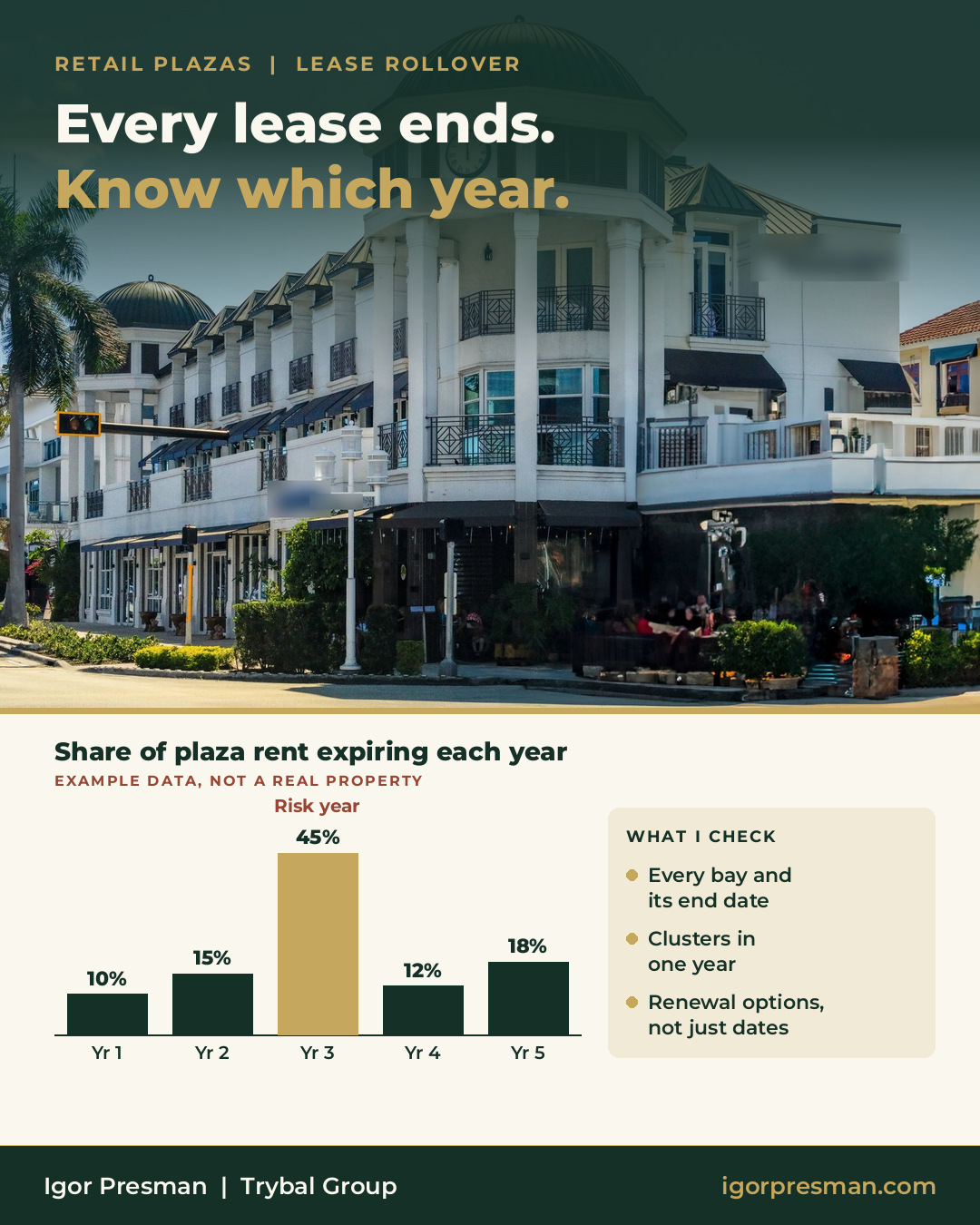
That last point matters more than most brands expect. If the tenant that brings people to the center is leaving next year, you want to know before you sign a ten year lease. I cover how buyers read this in lease rollover risk, and the same schedule tells a tenant a lot.
3. Exclusive use
If you are a coffee brand, a fitness concept or a quick service restaurant, you want lease language that protects your category so the landlord cannot put a direct competitor two doors down. The wording matters. A clause that says "coffee shop" is not the same as one that covers the sale of coffee and espresso drinks as a primary use. I also check whether existing tenants already hold exclusives that would limit what you can sell.
4. Co-tenancy and go dark rights
If a named anchor closes or occupancy in the center falls, your lease should say what happens to your rent and whether you have a way out. Paying full rent next to empty glass is a bad place to be. A co-tenancy clause can reduce your rent for a period and, if the problem lasts, give you the right to leave. I walk through what happens to a center when its main draw closes in what happens to a retail plaza when the anchor leaves.
5. The true occupancy cost
Base rent is one line. CAM, NNN charges, insurance and taxes sit on top, and in South Florida insurance and taxes can move a lot from year to year. Ask for the current charges per foot, how they have changed and whether there is a cap on controllable CAM. If the lease structure is new to you, see NNN vs gross vs modified gross leases.
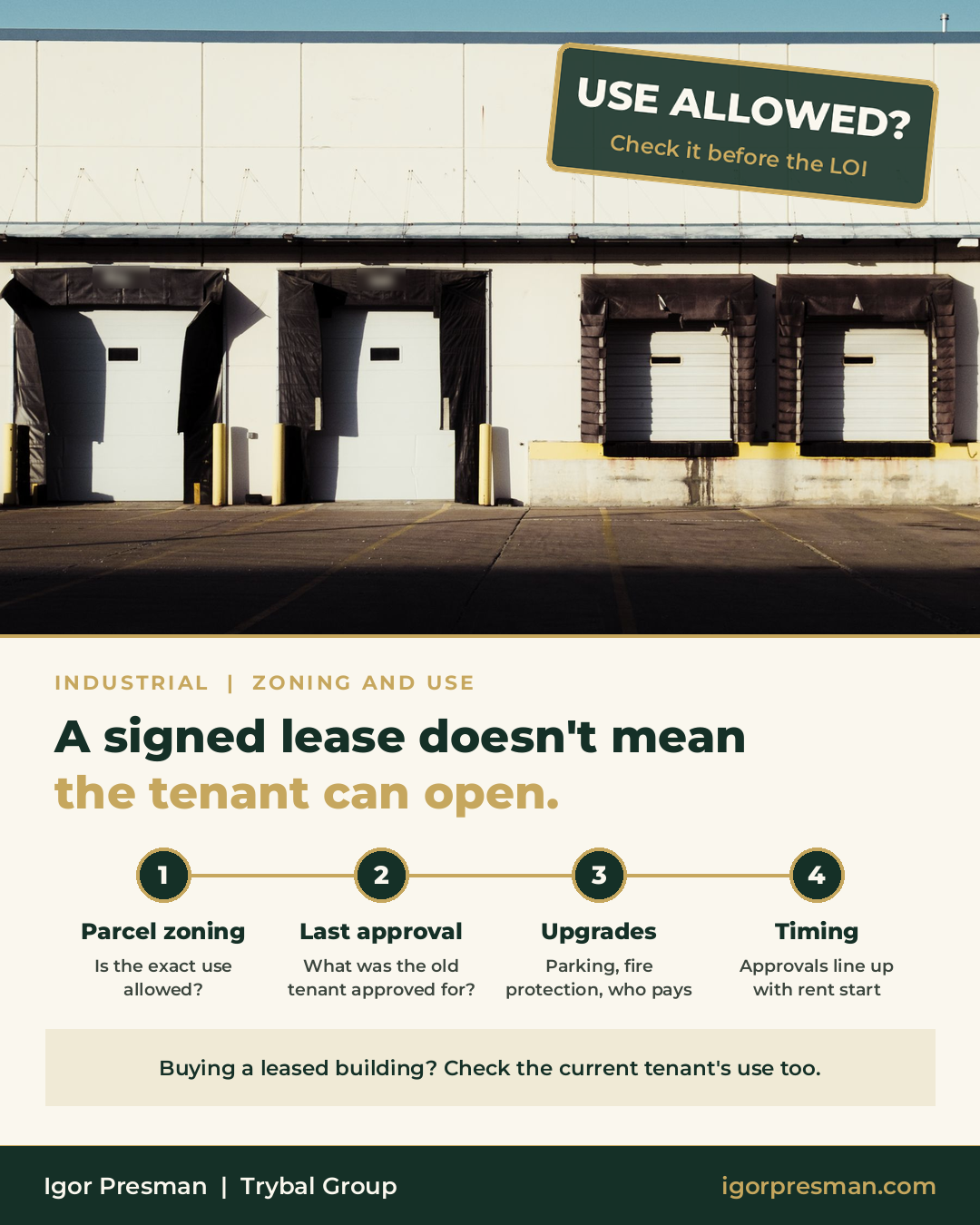
I also push on tenant improvement allowance and free rent during buildout. That is especially true for restaurants, which often need venting, grease traps, upgraded electrical and longer permitting. Before you sign, confirm the space can be approved for your use. My post on why a signed lease does not mean a tenant can open is written about warehouses, but the certificate of use problem is the same for a restaurant.
6. The paper at the end of the term
Renewal options, how rent resets when you renew and the personal guarantee terms. Those clauses are much easier to shape before you sign than after. A renewal option at a fixed or capped increase protects a location you have spent years building. A guarantee that burns off after a few good years of paying rent is very different from one that lasts the full term.
Why tenant representation helps
I have about 30 years in retail myself, so I have sat through enough of these deals to know where brands get surprised. Tenant rep work for expanding brands is usually paid from the landlord side, so you get representation in your corner at little or no direct cost. The landlord has a leasing team working for the building. It helps to have someone working for you.
FAQ
Q: What should I check before signing a retail lease?
Check visibility and access, the tenant mix next door, exclusive use, co-tenancy and go dark rights, the full occupancy cost beyond base rent, and the renewal and personal guarantee terms.
Q: What is an exclusive use clause?
An exclusive use clause stops the landlord from leasing another space in the same center to a business in your category, such as another coffee shop or another quick service restaurant.
Q: What is a co-tenancy clause in a retail lease?
A co-tenancy clause ties your rent or your right to stay to other tenants being open. If a named anchor closes or occupancy drops, your rent can go down and, if it lasts, you may be able to leave.
Q: What costs are on top of base rent in a NNN retail lease?
In a NNN lease the tenant usually pays its share of CAM, property insurance and real estate taxes on top of base rent. Together these make up your true occupancy cost.
Q: Who pays the tenant rep broker on a retail lease?
In most retail and restaurant leases the tenant rep's commission is paid from the landlord side, so the brand gets representation at little or no direct cost.
I work with retail, restaurant, franchise and fitness brands expanding across Miami-Dade, Broward and Palm Beach. If you are looking at a space, reach out to me directly, browse my current listings, or ask about off-market opportunities.

Igor Presman
Commercial Broker · Trybal Group