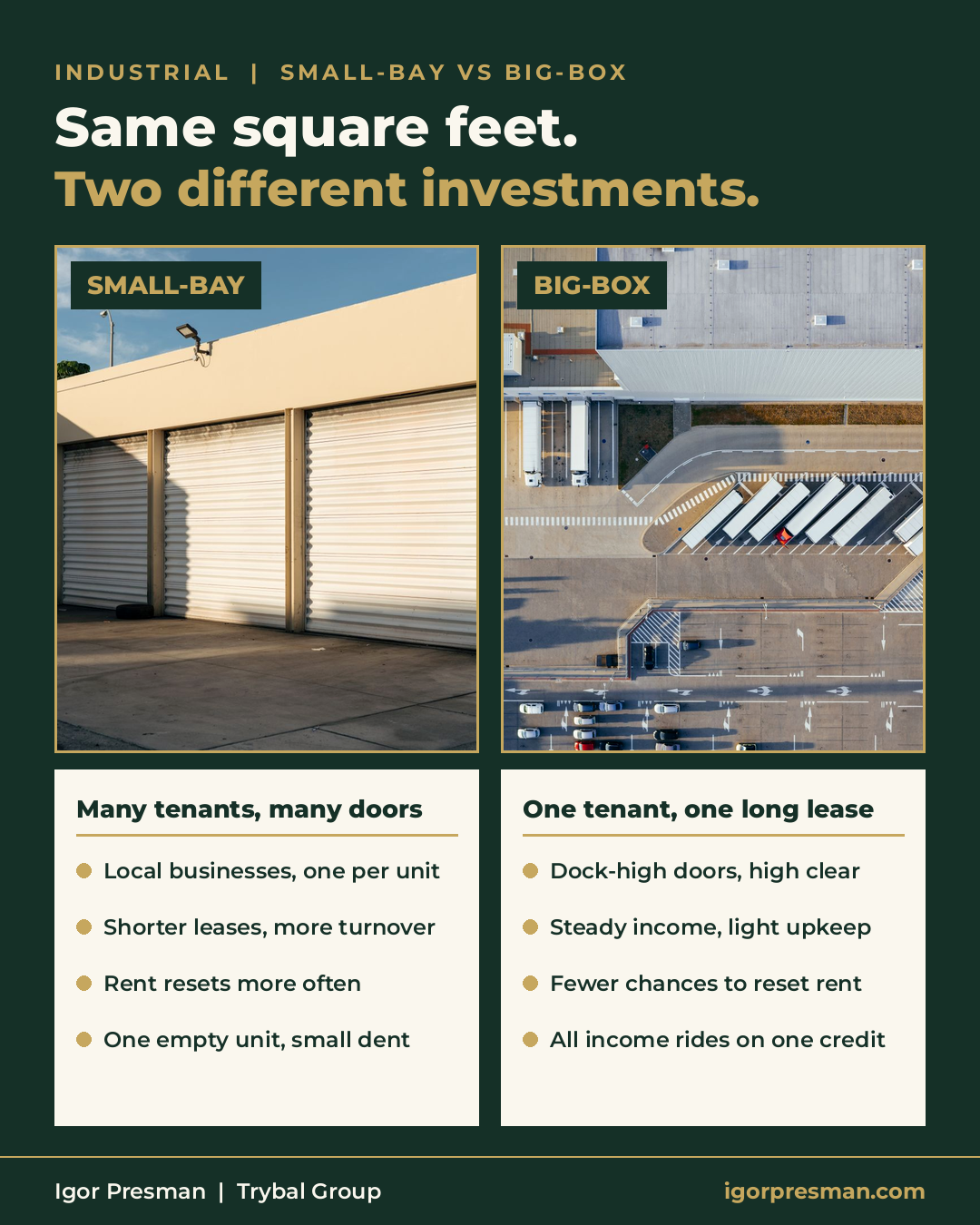
Short answer: neither one is better across the board. Small-bay industrial spreads the income across many local tenants on shorter leases. That means more management, but it also means more chances to bring rents back to market, and one vacancy is a small dent. Big-box industrial usually has one tenant on a long lease, so the income is steady and management is light, but everything rides on that one company. The right choice depends on how hands-on you want to be and how much single tenant risk you can live with.
Two warehouses can be the same size, in the same area, and still be completely different investments. A 40,000 square foot building can have one tenant or twenty. I work on both kinds of industrial across Miami-Dade, Broward and Palm Beach, and the first thing I explain to a new buyer is how differently the two behave.
What small-bay industrial is
Small-bay industrial is a building split into smaller units, each with its own roll-up door. The tenants are local businesses. Contractors, cabinet makers, auto shops, e-commerce sellers, and distributors who need a little space close to their customers. Leases are usually shorter, so people come and go more often.
The upside and downside of small-bay
That turnover cuts both ways. It means more leasing, more showings, more management, and more small repairs between tenants. But every time a lease ends, you get a chance to bring that unit's rent back to market. And because the income is spread across many tenants, one empty unit is a small dent, not a crisis.
What big-box industrial is
Big-box is the opposite. Usually one tenant, often on a long lease, in a building made for distribution. Dock-high doors, higher clear heights and a big truck court. Management is light and the income is predictable.
The risk with big-box
The catch is that everything rides on one company. You also get fewer chances to reset rent, because you are living with the terms you signed for a long time.
And when that tenant leaves, the building goes from 100 percent full to 100 percent empty overnight. Filling a big space can take a while, and the next tenant may want work done before they move in.
What I check on a small-bay building
When a client looks at small-bay, I go through a few things.
- When every lease expires, so they are not all rolling at once.
- The tenant mix, and whether too much of the income depends on one type of business.
- Parking and yard space, since small tenants often need room for trucks and trailers.
- Whether the units are separately metered.
- How common area costs get passed through to tenants.
What I check on a big-box building
When a client looks at big-box, the questions are different.
- The tenant's credit and how strong the company really is.
- How many years are left on the lease.
- What renewal options the tenant holds.
- How easy the building would be to re-lease if they left.
A building with standard specs is a lot easier to fill than one built around one company's operation. I go deeper on tenant strength in what makes a warehouse tenant creditworthy, and on the physical side in what I check on every warehouse tour in South Florida.
So which one should you buy?
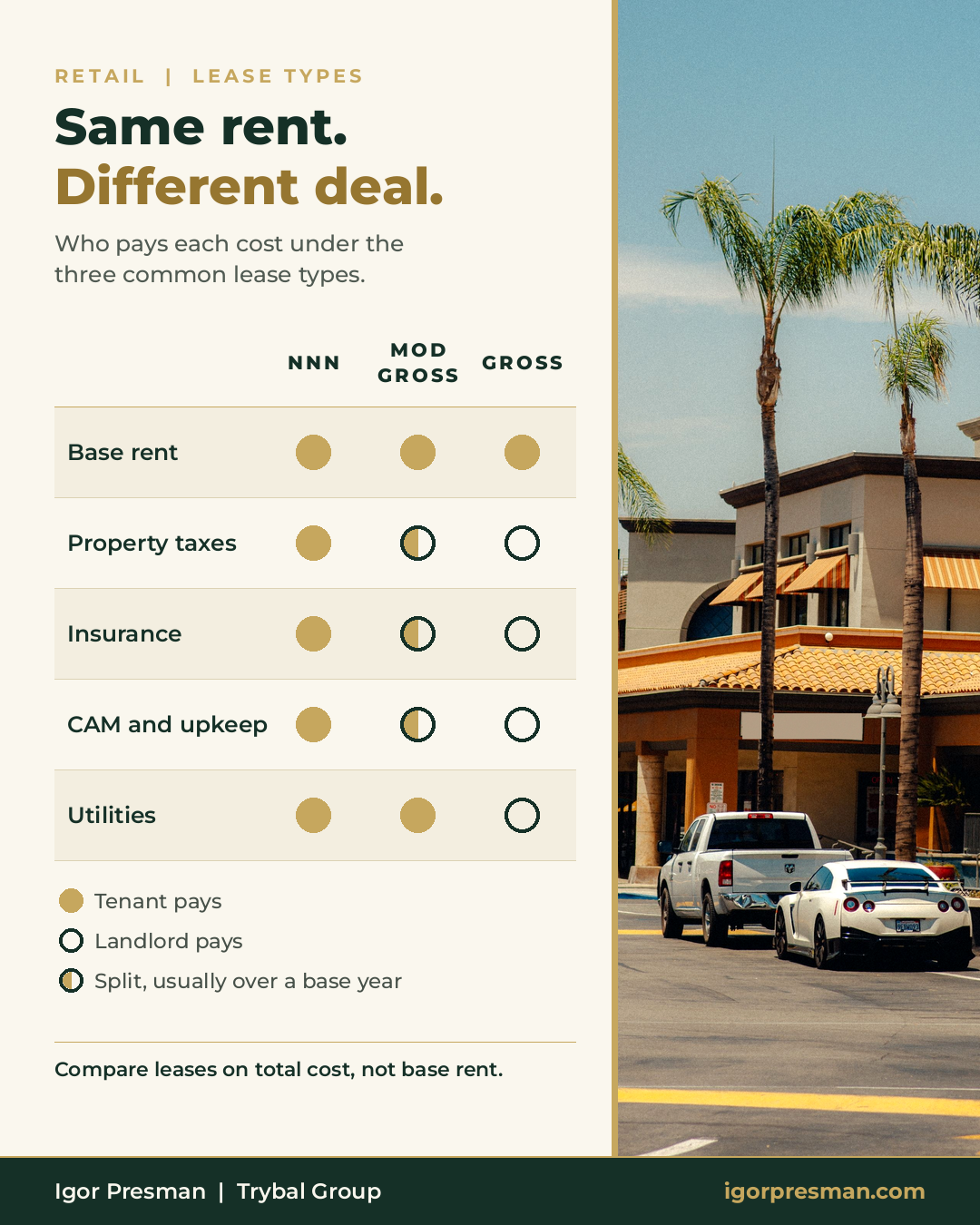
Neither one is better. It depends on how hands-on you want to be and how much single tenant risk you are comfortable with. Some investors like the steady check from one strong tenant. Others like the control of many small leases and the chance to push rents as they roll. Either way, the leases tell you what you are buying. The same goes for retail, which I cover in NNN vs gross vs modified gross retail leases.
FAQ
Q: What is small-bay industrial?
Small-bay industrial is a warehouse building divided into smaller units, each with its own roll-up door, leased to local businesses like contractors, auto shops and e-commerce sellers.
Q: What is big-box industrial?
Big-box industrial is a large warehouse usually leased to one tenant, often on a long lease, with dock-high doors, higher clear heights and a big truck court for distribution.
Q: Is small-bay or big-box industrial riskier?
They carry different risks. Small-bay has more turnover and management, but one vacancy only affects a small part of the income. Big-box has steady income, but if the single tenant leaves, the building goes fully vacant.
Q: What should I check before buying a small-bay industrial building?
Check the lease expirations so they do not all roll at once, the tenant mix, parking and yard space, whether units are separately metered, and how common area costs are passed through.
I work on both small-bay and big-box industrial across Miami-Dade, Broward and Palm Beach. If you are deciding between them, I am happy to talk it through. Reach out to me directly, browse my current listings, or ask about off-market opportunities.

Igor Presman
Commercial Broker · Trybal Group