Short answer: when the anchor in a retail plaza closes, the damage often spreads past that one space. Many inline leases carry a co-tenancy clause that lets the smaller tenant pay reduced rent, sometimes a percentage of sales, if a named anchor stops operating or occupancy drops below a set level. If the landlord does not fix it within a cure period, some tenants can terminate. Before buying a plaza, read every lease for co-tenancy triggers, the anchor's remaining term and options, and whether the anchor has an operating covenant.
Most people judge a retail plaza by its anchor. A busy grocery store fills the parking lot, and the smaller shops around it live off that traffic. What a lot of investors miss is that the leases are often tied together on paper too. I see this on plazas across Miami-Dade, Broward and Palm Beach every week.
What a co-tenancy clause is
Co-tenancy is a lease clause that protects an inline tenant if the plaza loses its draw. The nail salon, the pizza place and the tax office all signed their leases partly because the grocery store was next door. Many of them negotiate language that says what happens if it is not.
What triggers co-tenancy
It is usually triggered one of two ways.
- A named anchor stops operating in the center.
- Overall occupancy in the center drops below a set level.
The exact wording matters. Some leases name one specific anchor. Others allow a replacement of similar size and quality. Some count occupancy by square footage, others by the number of open stores.
What the tenant gets when it is triggered
When co-tenancy is triggered, the tenant usually gets a remedy. A common one is reduced rent, sometimes switching to a percentage of sales instead of the normal base rent. If the landlord does not fix the problem within a set cure period, some leases let the tenant terminate and walk away.
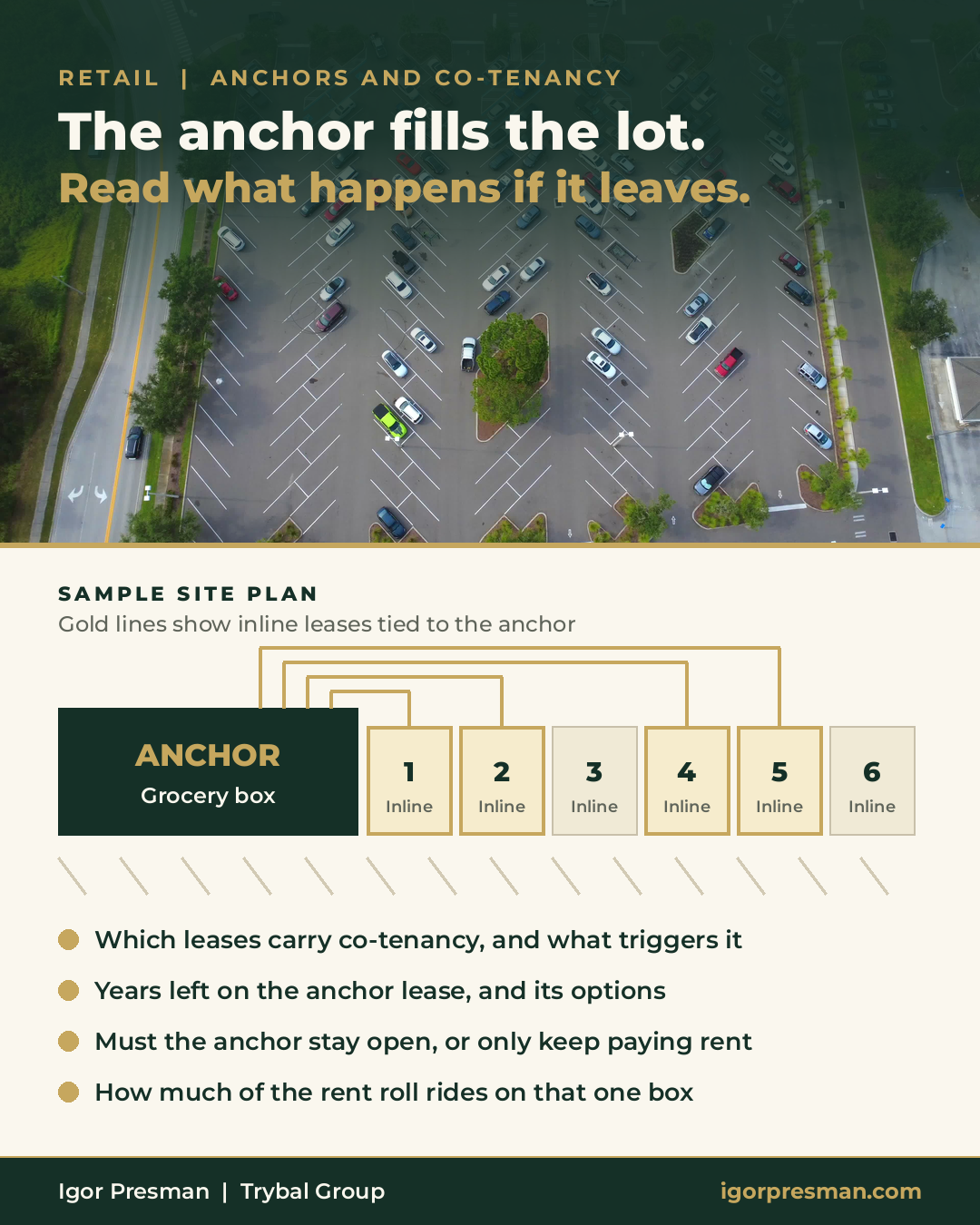
Now picture a plaza where four of six inline tenants have that language. The anchor leaves, and within months the income from most of the center drops. The buyer who only read the rent roll never saw it coming.
Going dark vs an operating covenant
There is one more detail I always look for. An anchor can be required to keep paying rent but not required to keep the doors open. That is called going dark. The rent check still clears, but the lot empties, the small tenants suffer, and their co-tenancy rights may kick in anyway.
The clause that prevents this is an operating covenant, an actual obligation to run the store. An anchor with ten years left and an obligation to operate is a very different plaza than one with eighteen months left and no such promise.
What I check before a client buys a retail center
Before a client buys a retail center, I want to see every lease, not just a summary. Then I want answers to a few questions.
- Which inline leases have co-tenancy language, and what exactly triggers it.
- How many years the anchor has left and whether it holds renewal options.
- Whether the anchor has to keep the store open, or only keep paying rent.
- How much of the rent roll depends on that one tenant.
- Whether the estoppels confirm there are no side agreements nobody mentioned.
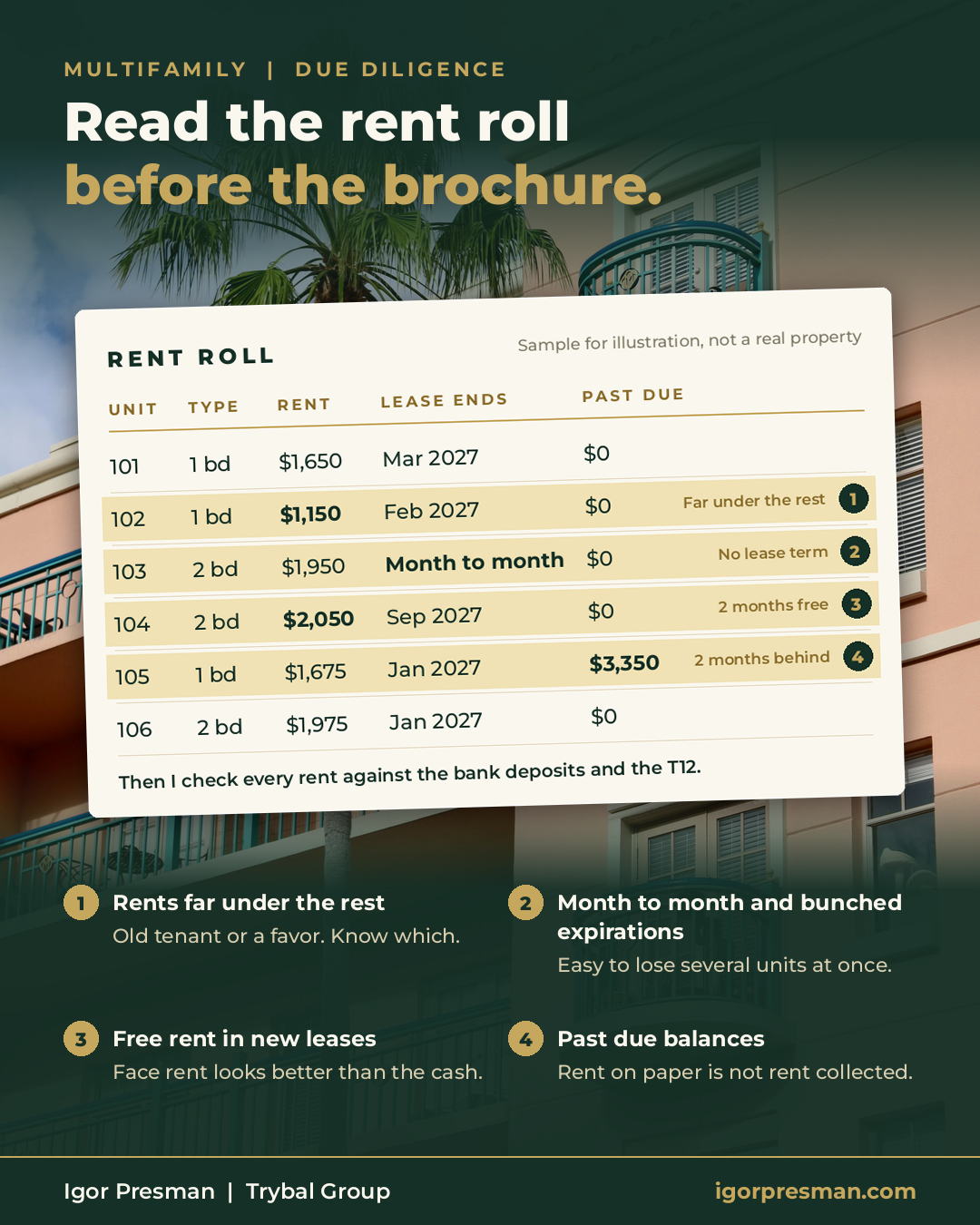
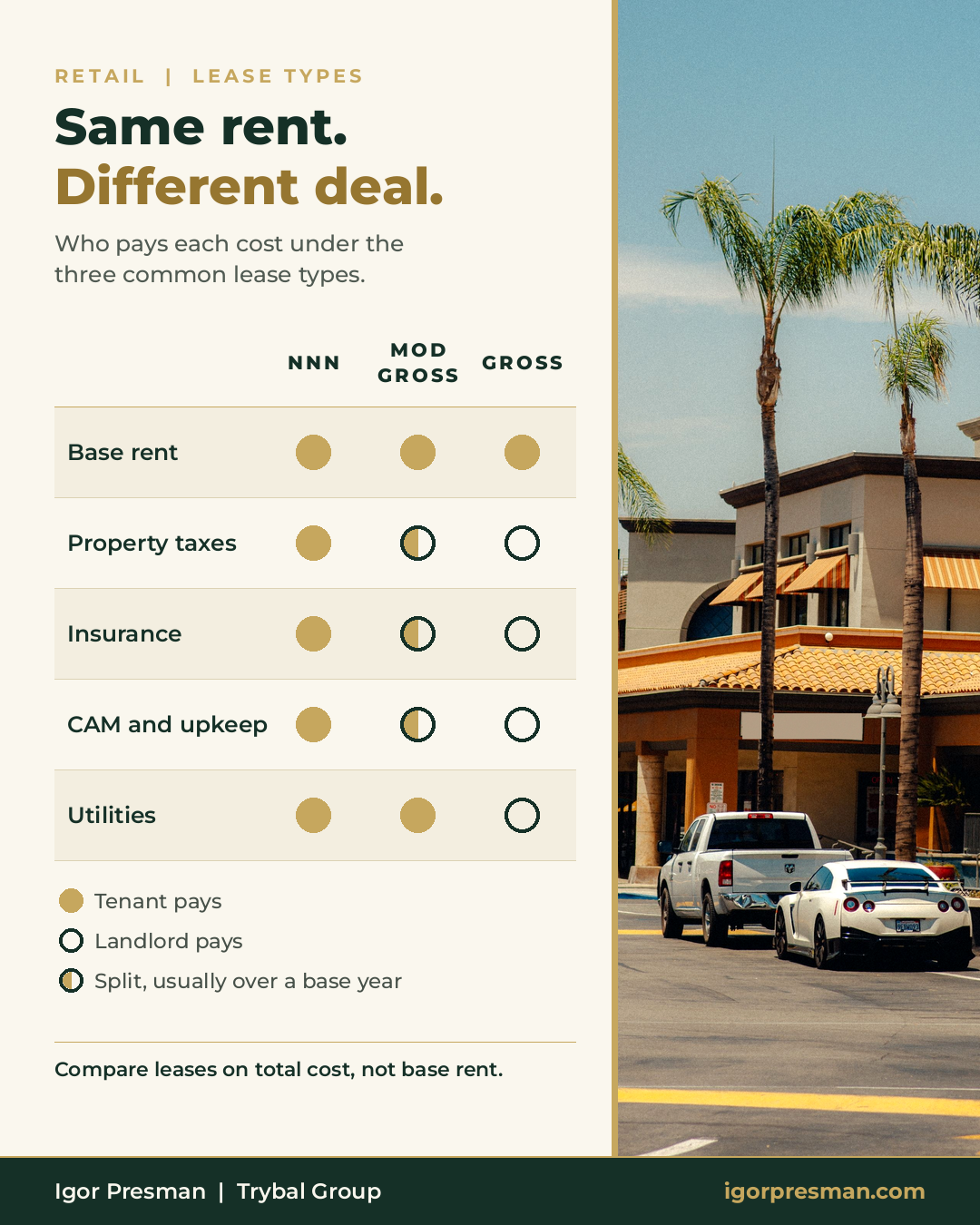
Lease structure matters here too. On a triple net lease the tenant pays its share of taxes, insurance and CAM, so a co-tenancy rent reduction can hit more than base rent. I explain the lease types in NNN vs gross vs modified gross retail leases. For the market side, read why South Florida retail is one of the tightest markets in the country. And the same lease by lease discipline applies to multifamily too, which I cover in how I read a multifamily rent roll.
Is an anchored plaza still a good buy?
None of this makes an anchored plaza a bad buy. A strong anchor with a long lease and an operating covenant is one of the best things a plaza can have. You just want to know exactly what you are buying, and what happens on the bad day.
FAQ
Q: What is a co-tenancy clause in a retail lease?
It is a clause that gives an inline tenant a remedy, usually reduced rent or the right to terminate, if a named anchor stops operating or the center's occupancy falls below a set level.
Q: What does it mean when an anchor goes dark?
The anchor keeps paying rent but closes the store. The rent still comes in, but the traffic stops, and that can trigger co-tenancy rights for the smaller tenants.
Q: What is an operating covenant?
An operating covenant is a lease obligation for a tenant to actually keep its store open and running, not just keep paying rent.
Q: What should I check before buying an anchored retail plaza?
Read every lease. Check which tenants have co-tenancy language and what triggers it, the anchor's remaining term and renewal options, whether the anchor has an operating covenant, how much income depends on the anchor, and what the estoppels confirm.
I work on retail plazas across Miami-Dade, Broward and Palm Beach every week. If you are weighing one, I am happy to walk through the leases with you. Reach out to me directly, browse my current listings, or ask about off-market opportunities.

Igor Presman
Commercial Broker · Trybal Group